Financial management is one of the most critical foundations of a successful business. Without clear systems for tracking revenue, controlling expenses, and managing cash flow, businesses often struggle to maintain profitability and sustain long-term growth. This is why entrepreneurs rely on financial management systems — structured processes that help businesses organize financial data, monitor performance, and make informed financial decisions.
Effective financial management systems combine tools such as budgeting frameworks, cash flow tracking, financial reporting, and strategic planning. These systems allow business owners to understand how money moves through their organization and identify opportunities to improve efficiency and profitability — especially when transitioning from simple income generation into structured business operations.
In this guide, we will explore how financial management systems work, the core components that support financial stability, and the strategies businesses use to maintain strong financial control while scaling their operations.
What Are Financial Management Systems?
Financial management systems are structured processes used to track revenue, manage expenses, analyze profitability, and maintain financial stability within a business.
These systems help entrepreneurs understand the financial health of their operations.
Financial management typically includes:
- budgeting
- cash flow management
- financial reporting
- expense tracking
- profit analysis
Without effective financial systems, businesses often struggle with poor decision-making and unstable cash flow.
Strong financial management allows businesses to plan growth, control costs, and maintain profitability.
The Financial Management Framework
Businesses manage finances through a structured framework.
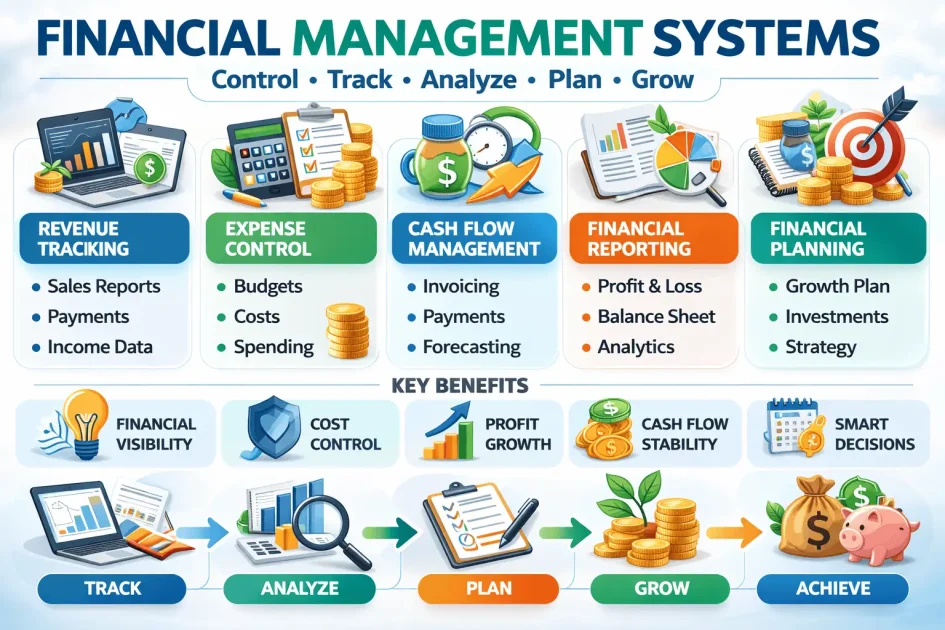
| System | Purpose | Outcome |
| Revenue Tracking | Monitor income | Financial visibility |
| Expense Control | Manage costs | Profit protection |
| Cash Flow Management | Maintain liquidity | Operational stability |
| Financial Reporting | Analyze performance | Better decisions |
| Financial Planning | Plan growth | Strategic expansion |
This framework provides the foundation for long-term financial success and supports businesses as they evolve into scalable income systems.
Revenue Tracking Systems
Tracking revenue is essential for understanding business performance.
Businesses track income through:
• sales reports
• payment systems
• accounting software
Accurate revenue tracking allows business owners to identify:
• growth trends
• seasonal patterns
• high-performing products or services
Understanding revenue sources helps businesses optimize their income strategies. This becomes important when building multiple income streams across different business models.
Expense Management Systems
Controlling expenses is equally important.
Businesses track expenses such as:
- operational costs
- marketing expenses
- employee wages
- technology tools
Expense management helps identify unnecessary spending and maintain profitability.
Businesses often use budgeting systems to ensure that expenses remain aligned with revenue.
Cash Flow Management
Cash flow represents the movement of money in and out of a business.
Positive cash flow occurs when incoming revenue exceeds outgoing expenses.
Negative cash flow can create financial instability.
Businesses manage cash flow through:
- invoicing systems
- payment tracking
- financial forecasting
Strong cash flow management ensures stability — especially when building businesses designed to generate recurring or predictable income.
Financial Reporting & Analysis
Financial reporting provides insights into business performance.
Common financial reports include:
- profit and loss statements
- balance sheets
- cash flow statements
These reports help business owners evaluate:
- profitability
- financial stability
- operational efficiency
Financial analysis allows leaders to make informed decisions about investments and expansion.
Financial Planning for Business Growth
Financial planning helps businesses prepare for future opportunities.
Planning includes:
- budgeting
- forecasting
- capital investment strategies
Businesses that plan finances effectively can expand operations while maintaining financial stability.
Strategic financial planning ensures that growth remains sustainable — this aligns with businesses begin expanding through structured marketing and growth systems that increase revenue capacity.
Budgeting Systems for Businesses
Budgeting systems help businesses plan how financial resources will be allocated over a specific period. A well-designed budget ensures that spending aligns with revenue expectations and long-term financial goals.
Most businesses create budgets to control operational expenses, forecast future growth, and prevent unnecessary spending. Budgeting systems also help businesses allocate funds for marketing, technology, staffing, and expansion.
Common budgeting methods include:
| Budget Type | Purpose |
| Operational Budget | Forecast daily business expenses |
| Cash Flow Budget | Track incoming and outgoing cash |
| Capital Budget | Plan long-term investments |
| Project Budget | Control costs for specific projects |
Budgeting provides financial discipline and allows businesses to anticipate financial challenges before they occur. By regularly reviewing budgets and adjusting forecasts, business owners maintain better control over financial performance.
Effective budgeting systems also improve decision-making by helping leaders evaluate whether new investments or initiatives are financially feasible.
Profitability Analysis Systems
Profitability analysis helps businesses determine whether their operations generate sustainable profit.
Many businesses generate revenue but still struggle financially because they fail to analyze profitability properly. Profitability systems examine how revenue compares to costs across products, services, or departments.
Common profitability metrics include:
| Metric | Meaning |
| Gross Profit | Revenue minus cost of goods sold |
| Operating Profit | Profit after operating expenses |
| Net Profit | Final profit after taxes and expe |
These metrics help business owners understand which activities generate the highest financial returns.
Profitability analysis also helps identify underperforming products or services that may require adjustments in pricing, marketing, or operational costs.
By consistently analyzing profitability, businesses can improve efficiency and focus on their most profitable opportunities.
Financial Forecasting & Planning
Financial forecasting allows businesses to anticipate future financial performance.
Forecasting systems analyze historical financial data and market trends to predict future revenue and expenses. These predictions help business owners prepare for growth opportunities or potential economic challenges.
Common forecasting techniques include:
- revenue forecasting
- expense forecasting
- sales projections
- cash flow forecasting
Forecasting provides a roadmap for future financial decisions. For example, if revenue projections show significant growth, businesses may invest in hiring additional staff or expanding production capacity.
Conversely, forecasting can also reveal potential financial risks, allowing companies to adjust spending or improve operational efficiency before problems arise.
Strategic financial planning ensures that business growth remains sustainable.
Financial Risk Management
Every business faces financial risks, including unexpected expenses, revenue fluctuations, and economic uncertainty. Financial risk management systems help businesses identify and mitigate these risks.
Common financial risks include:
- cash flow shortages
- rising operational costs
- declining revenue
- economic downturns
Businesses reduce financial risk through strategies such as maintaining emergency reserves, diversifying revenue sources, and monitoring financial performance regularly.
Insurance coverage, legal compliance, and financial reserves also play important roles in protecting businesses from financial disruption.
Effective risk management ensures that businesses can remain stable even during challenging economic conditions.
Financial Systems for Business Growth
As businesses grow, financial management systems must become more sophisticated.
Small businesses often begin with simple accounting tools, but expanding companies typically require advanced systems that support:
- financial reporting
- performance analysis
- strategic investment decisions
- operational scaling
Strong financial systems allow entrepreneurs to confidently expand operations — this is closely related to transitioning from small-scale income sources into fully structured businesses.
When financial systems are properly implemented, businesses gain the clarity needed to expand operations, invest in new products, and scale sustainably.
Over time, disciplined financial management becomes one of the most important competitive advantages for long-term business success.
Strategic Takeaway
Financial management systems provide the foundation for stable and profitable business operations.
By tracking revenue, controlling expenses, managing cash flow, and analyzing financial performance, businesses gain the clarity needed to make informed decisions.
Strong financial systems allow entrepreneurs to maintain financial discipline, plan growth strategies, and build sustainable organizations capable of long-term success.
Frequently Asked Questions About Financial Management Systems
Why are financial systems important for businesses?
Financial systems help businesses understand their financial health, control costs, manage cash flow, and plan future growth.
What tools are used for financial management?
Common tools include accounting software, budgeting systems, financial reports, and cash flow forecasting models.
What is the difference between accounting and financial management?
Accounting records financial transactions, while financial management focuses on analyzing financial data and making strategic financial decisions.
How do financial systems support business growth?
By providing financial visibility, financial systems help businesses allocate resources effectively, manage risks, and plan sustainable expansion.