People searching how to build passive income are not looking for ideas anymore — they want a step-by-step framework for turning assets into recurring income systems.
These systems are often built on different self employment income models that determine how income is generated and scaled over time.
Unlike simple passive income lists, building passive income requires designing assets, automating revenue generation, and scaling income streams over time.
This guide explains how to build passive income step-by-step, including the systems, assets, and strategies entrepreneurs use to create long-term recurring income.
How Do You Build Passive Income?
You build passive income by creating income-producing assets that continue generating money with minimal ongoing work. Understanding this shift requires seeing how income moves from work-based earnings to asset-driven income systems over time. Common ways to build passive income include investing in dividend stocks, owning rental properties, creating digital products, affiliate marketing, and building online businesses that produce recurring revenue.
Passive income is typically built over time by developing scalable systems or investments that generate consistent income.
Common ways to build passive income include:
• creating digital products
• investing in dividend stocks
• building affiliate marketing websites
• owning rental properties
• launching subscription-based businesses
Many of these approaches start as simple income ideas you can begin on your own before evolving into scalable systems.
The key principle is building assets that produce recurring income instead of trading time for money.
Passive Income Building Framework
Building passive income rarely happens overnight. Most successful passive income systems require an initial period of effort, planning, and asset creation before income becomes consistent. Entrepreneurs who successfully build passive income usually follow a structured process that transforms active work into long-term income-producing assets.
Building these systems effectively requires strong foundational business systems to support growth and sustainability.
The process typically includes selecting the right income model, creating a scalable asset, automating operations, and reinvesting profits to expand income sources.
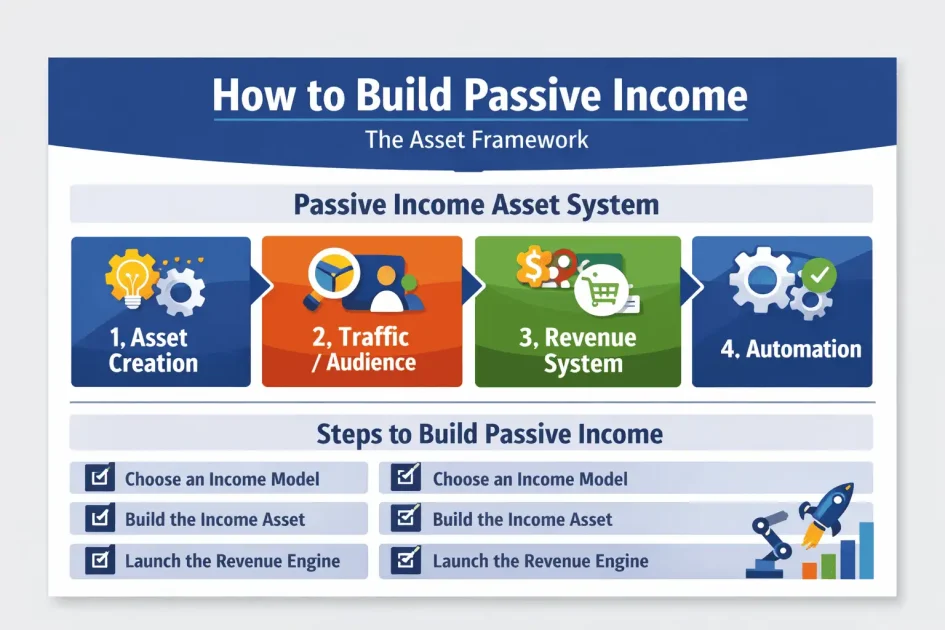
Choose a Passive Income Model
The first step in building passive income is selecting the right income model. Some models rely on digital assets, while others involve financial investments or intellectual property.
Common passive income models include:
• digital businesses
• investment assets
• intellectual property licensing
• automated ecommerce systems
Choosing the right model depends on available capital, skills, and long-term goals.
For beginners, many of these models start as flexible work-from-home business opportunities before becoming fully automated.
Build a Passive Income Asset
Passive income is generated through assets that continue producing income after the initial work is completed.
Examples of passive income assets include:
• content websites
• dividend stock portfolios
• rental properties
• digital product libraries
• subscription platforms
Creating these assets requires upfront effort, but once established they can generate income repeatedly.
Some of the most powerful examples include property-based income strategies like rental real estate investments.
Automate the Income System
Automation is what transforms income streams into passive systems. Without automation, income remains active and dependent on continuous work.
Automation tools can include:
• ecommerce fulfillment systems
• marketing funnels
• automated subscription billing
• digital product delivery platforms
These systems allow income to continue flowing with minimal daily involvement.
Automation becomes significantly more effective when supported by customer acquisition and traffic systems that run continuously.
Scale Passive Income Sources
Once a passive income system begins generating revenue, the next step is scaling the system.
Scaling strategies often include:
• increasing traffic to digital assets
• expanding product offerings
• reinvesting profits into new income sources
• building multiple passive income streams
This is how entrepreneurs transition into building diversified income streams that compound over time.
Scaling allows entrepreneurs to significantly increase income without increasing workload proportionally.
Reinvest Passive Income for Growth
One of the most powerful strategies for building passive income is reinvesting profits. Many entrepreneurs use early passive income earnings to fund new investments or digital assets.
Reinvestment strategies may include:
• purchasing dividend stocks
• acquiring additional websites
• creating new digital products
• expanding subscription services
Over time, reinvestment accelerates the growth of passive income.
Common Mistakes When Building Passive Income
Many beginners struggle with passive income because they misunderstand how these systems work. Passive income almost always requires an initial period of active effort.
Common mistakes include:
• expecting immediate income
• choosing overly complex business models
• failing to automate systems
• neglecting long-term asset development
Avoiding these mistakes increases the chances of building sustainable passive income.
Optimizing Passive Income Systems
Once passive income systems are established, entrepreneurs focus on improving efficiency and profitability.
Optimization strategies include:
• improving conversion rates
• reducing operational costs
• expanding digital distribution channels
• diversifying income sources
Continuous optimization allows passive income systems to grow stronger over time.
Conclusion
Learning how to build passive income begins with understanding that recurring income comes from assets rather than hourly work. By creating systems such as digital products, investment portfolios, or automated online businesses, individuals can gradually develop income streams that continue producing revenue over time.
The most successful passive income builders focus on long-term asset creation, strategic automation, and consistent reinvestment. By following a structured approach to building passive income systems, entrepreneurs can develop multiple income streams that support financial independence and long-term wealth creation.
Frequently Asked Questions About How to Build Passive Income
How do you build passive income from scratch?
You build passive income from scratch by creating income-producing assets such as digital products, affiliate websites, dividend investments, or rental properties. These assets generate recurring revenue once the initial system is established.
What is the easiest way to build passive income?
For beginners, digital assets such as blogging, affiliate marketing, and selling digital products are often the easiest ways to build passive income because they require relatively low startup costs.
How long does it take to build passive income?
Building passive income typically takes months or years depending on the asset being developed. Most passive income systems require an initial period of work before they generate consistent revenue.
Can beginners build passive income without money?
Yes. Many entrepreneurs build passive income without large investments by creating digital assets such as blogs, YouTube channels, affiliate websites, or online courses.