Starting a blog is one of the most accessible ways to build an online presence and create a digital business. Many entrepreneurs begin blogging to share knowledge, build an audience, and eventually generate income through advertising, affiliate marketing, digital products, or consulting services.
Unlike many traditional businesses, blogging can be started with minimal startup costs and scaled over time into a valuable digital asset. With the right strategy, a blog can evolve from a simple website into a self employed online business that generates recurring income.
This guide explains how to start a blog step by step, including choosing a niche, setting up your website, creating content, attracting readers, and monetizing your blog.
Blogging by the Numbers
- 600 million blogs exist worldwide as of 2024
- Blogs with 10,000+ monthly visitors can generate $500 to $2,500/month in passive ad revenue
- 77% of internet users read blogs regularly (Demand Metric)
- Bloggers who publish consistently for 2+ years are 3x more likely to report strong revenue
- The average time to first $1,000/month from blogging is 18 to 24 months
What Is a Blog?
A blog is a website that regularly publishes content around a specific topic or niche. Blogs are commonly used to share knowledge, build an audience, and generate income through advertising, affiliate marketing, digital products, and online services.
Blogs can cover almost any topic, including:
- business
- personal finance
- travel
- technology
- health
- lifestyle
Many successful blogs eventually become self employed digital businesses that generate income through multiple revenue streams.
How to Start a Blog: Step-by-Step Framework
Starting a blog involves several key steps, from choosing a niche to publishing content and building an audience.

Step 1: Choose a Profitable Blog Niche
A blog niche is the specific topic your blog focuses on.
Choosing the right niche is important because it determines:
- your target audience
- the type of content you publish
- how your blog can generate income
Good blog niches typically have:
- strong search demand
- clear audience problems
- monetization opportunities
Examples of profitable blogging niches include:
- personal finance
- online business
- health and fitness
- travel
- technology
- self improvement
Choosing a focused niche helps your blog build authority and credibility over time.
Step 2: Choose a Blogging Platform
The blogging platform is the software used to publish and manage your blog.
The most popular platform is WordPress, which powers a large portion of websites on the internet.
Blogging platforms typically fall into two categories:
Hosted platforms
Examples include:
- Wix
- Squarespace
- Blogger
These platforms are easy to use but offer limited control.
Self-hosted platforms
Self-hosted platforms like WordPress.org give you full control over your blog and allow you to install themes, plugins, and advanced features.
Most professional bloggers use self-hosted WordPress.
Step 3: Register a Domain Name
Your domain name is your blog’s web address.
Example:
www.exampleblog.com
When choosing a domain name, try to make it:
- short
- easy to remember
- related to your niche
- simple to spell
A good domain name helps your blog build brand recognition.
Step 4: Set Up Web Hosting
Web hosting is the service that stores your website files and makes your blog accessible on the internet.
Most bloggers start with affordable hosting providers.
Typical blogging costs include:
| Expense | Typical Cost |
| Domain name | $10-15/year |
| Web hosting | $3-10/month |
| WordPress theme | Free-$80 |
| Plugins | Free-$100 |
Overall, starting a blog is relatively inexpensive compared with many other businesses.
Popular Blog Hosting Options
Choosing the right hosting provider is an important step when learning how to start a blog, because hosting affects your website’s speed, reliability, and long-term scalability.
Many beginner bloggers start with affordable hosting providers that are optimized for WordPress.
| Hosting Provider | Best For | Typical Cost |
| Bluehost | Beginner bloggers | $3-10/month |
| SiteGround | Performance and reliability | $5-15/month |
| Hostinger | Budget-friendly hosting | $2-8/month |
| WP Engine | Advanced WordPress hosting | $20+ /month |
For beginners, most hosting providers offer simple WordPress installation tools that allow you to launch your blog within minutes.
When choosing hosting, look for:
- reliable uptime
- fast website speed
- strong customer support
- easy WordPress setup
Reliable hosting ensures your blog remains accessible and performs well as your traffic grows.
Blog Monetization Roadmap
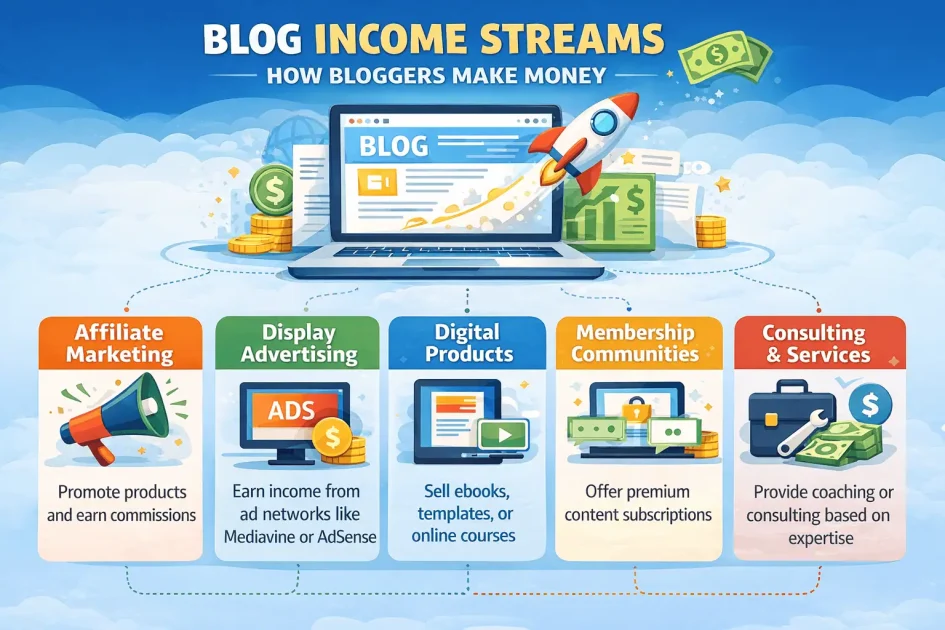
Many new bloggers want to know how blogs actually generate income. In reality, most blogs grow through several monetization stages as traffic increases.
| Stage | Monetization Method | Description |
| Stage 1 | Affiliate Marketing | Promote products and earn commissions |
| Stage 2 | Display Advertising | Earn revenue from website ads |
| Stage 3 | Digital Products | Sell ebooks, templates, or courses |
| Stage 4 | Memberships | Offer exclusive content or communities |
| Stage 5 | Services | Provide consulting or coaching |
blog traffic grows, bloggers often combine multiple revenue streams to create a diversified online business.
For example, a successful blog might earn income from affiliate marketing, digital products, and consulting services simultaneously.
This is why many entrepreneurs learn how to start a blog as a foundation for building scalable digital income.
Blogging is one of the most popular digital self employment models because it allows entrepreneurs to build an online business with relatively low startup costs.
Many bloggers combine their content strategy with affiliate marketing to generate recurring income.
Successful blogs can eventually generate passive income through advertising, affiliate partnerships, and digital products.
Blogging remains one of the most accessible online business ideas for beginners.
Many successful bloggers rely on SEO and organic traffic systems to attract consistent website visitors.
Blogging is one of many self employment models that allow entrepreneurs to build independent income streams online.
How to Validate a Blog Niche
Before starting a blog, it is important to confirm that the niche has real demand and monetization potential.
You can validate a niche by checking:
| Validation Factor | What to Look For |
| Search demand | Topics people actively search for |
| Competition | Existing blogs in the niche |
| Monetization | Affiliate products or services |
| Audience problems | Questions people want answered |
Blog niches that solve specific problems often perform better than broad topics.
Essential Blogging Tools
Several tools help bloggers manage content, optimize SEO, and grow their audience.
| Tool Type | Purpose |
| SEO tools | keyword research and optimization |
| Email marketing tools | building subscriber lists |
| Analytics tools | tracking blog performance |
| Design tools | creating graphics and images |
These tools help bloggers build professional and scalable websites.
Blog Content Planning Strategy
A successful blog usually follows a structured content plan.
Example strategy:
| Content Type | Purpose |
| Pillar articles | major topic guides |
| Supporting articles | detailed subtopics |
| Tutorials | step-by-step instructions |
| Case studies | real examples |
Typical Blog Growth Timeline
| Stage | What Happens |
| Month 1-3 | website setup and initial content |
| Month 3-6 | first search traffic appears |
| Month 6-12 | traffic begins growing steadily |
| Year 1+ | monetization opportunities increase |
Industry data suggests that most blogs earn $0 to $500/month in year one. Bloggers publishing consistently in a focused niche commonly reach $1,000 to $5,000/month by year two. Top earners in competitive niches report $10,000 to $50,000/month, though results at that level typically take 3 to 5 years to achieve.
Long-Term Opportunities From Blogging
A blog can evolve into much more than a simple website.
Many successful bloggers eventually build:
- digital product businesses
- affiliate marketing websites
- membership communities
- consulting businesses
- online education platforms
Over time, a blog can become a valuable digital asset that generates recurring income.
Blog Setup Timeline
New bloggers often want to know how long it takes to build a successful blog.
| Stage | Typical Timeline |
| Blog setup | 1 day |
| First content published | 1-2 weeks |
| Search traffic begins | 3-6 months |
| Income potential | 6-12 months |
Blogging success typically requires consistent publishing and patience.
Creating Your First Blog Content
Content is the foundation of every successful blog.
Instead of publishing random posts, many bloggers use a content strategy.
This strategy often includes:
Pillar Articles
Large in-depth guides that explain a major topic.
Example:
Passive Income Ideas
Supporting Articles
Supporting articles expand on smaller topics related to the pillar article.
Example:
Passive income for beginners
Passive income streams
How to build passive income
This approach improves SEO and helps search engines understand your site’s structure.
Blogging Traffic Sources
A blog grows by attracting readers from different traffic sources.
The most common traffic channels include:
| Traffic Source | Strategy |
| Google search | SEO optimized content |
| Social media | audience engagement |
| Email marketing | subscriber lists |
| visual content sharing |
Search engine traffic is often the most sustainable source of blog visitors.
How Blogs Make Money
Many people start blogs with the goal of generating income.
Successful blogs often use several monetization methods.
Affiliate Marketing
Affiliate marketing allows bloggers to earn commissions by recommending products or services.
When readers purchase through affiliate links, the blogger earns a commission.
Bloggers in profitable niches typically earn $1,000 to $10,000/month from affiliate commissions at scale.
Display Advertising
Blogs can earn income by displaying advertisements.
Popular advertising networks include:
- Google AdSense
- Mediavine
- AdThrive
Advertising revenue increases as traffic grows.
Bloggers with 50,000 monthly pageviews typically earn $500 to $2,000/month from display ads. Mid-size bloggers with 25,000 to 100,000 monthly visitors also charge $300 to $1,500 per sponsored post.
Digital Products
Many bloggers create digital products such as:
- online courses
- ebooks
- templates
- educational resources
Digital products can generate high profit margins.
Services and Consulting
Some bloggers monetize their expertise by offering services such as:
- consulting
- coaching
- freelance work
A blog can function as a marketing platform for professional services.
Industry data suggests that established blogs in finance, business, and health niches report $10,000 to $50,000/month in combined income from multiple revenue streams.
Blogging as a Self Employed Business
Blogging can evolve into a full self employed digital business.
Over time, a blog may generate income from:
- affiliate marketing
- advertising
- digital products
- consulting services
- memberships
Successful blogs also become valuable digital assets that can be sold or expanded into larger businesses.
For many entrepreneurs, blogging becomes a foundation for online entrepreneurship.
Common Blogging Mistakes
Many beginner bloggers encounter similar challenges.
Common mistakes include:
- choosing a niche without demand
- publishing inconsistent content
- ignoring search engine optimization
- expecting immediate income
Successful blogging requires long-term commitment and strategic planning.
Is Blogging Still Profitable?
Blogging remains profitable for entrepreneurs who focus on:
- solving real problems
- publishing high-quality content
- building audience trust
- developing multiple income streams
While competition has increased, blogs that provide valuable and well-structured content can still achieve significant traffic and income.
Conclusion
Starting a blog is one of the most accessible ways to build an online presence and create a digital business. By choosing the right niche, setting up your website properly, publishing helpful content, and developing a monetization strategy, anyone can learn how to start a blog and turn it into a valuable online asset.
While success rarely happens overnight, bloggers who consistently create useful content and focus on solving real problems for their audience can gradually grow traffic, build authority, and generate income. For many entrepreneurs, learning how to start a blog becomes the first step toward building a self employed online business that produces long-term opportunities and financial independence.
Frequently Asked Questions About How to Start a Blog
How do beginners start a blog?
Beginners can start a blog by choosing a niche, registering a domain name, setting up web hosting, installing a blogging platform like WordPress, and publishing helpful content that serves their audience.
How much does it cost to start a blog?
Starting a blog usually costs between $50 and $150 per year, depending on the domain name, web hosting provider, and optional design tools used to build the website.
Can you start a blog with no experience?
Yes. Anyone can learn how to start a blog even without technical experience. Many blogging platforms provide simple tools that allow beginners to create websites, publish articles, and manage their content easily.
How long does it take to make money blogging?
Most blogs take 6 to 12 months to begin generating income. The timeline depends on factors such as the niche, the quality of content, the amount of traffic the blog receives, and the monetization strategies used.
Is starting a blog still profitable?
Yes. Learning how to start a blog can still lead to profitable opportunities when bloggers focus on building an audience, publishing valuable content, and monetizing their blogs through advertising, affiliate marketing, digital products, or consulting services.
How much money can you make from blogging?
Blogging income varies widely depending on niche, traffic, and monetization method. Most new bloggers earn under $500/month in their first year. By year two, bloggers publishing consistently in a focused niche commonly reach $1,000 to $5,000/month through a combination of ads, affiliate marketing, and digital products. Top earners in competitive niches like personal finance and business report $10,000 to $50,000/month, though these results typically take 3 to 5 years to achieve.